The Backyard Buoys program continues to expand across the Pacific Islands, Pacific Northwest, and Alaska, providing coastal communities with real-time wave data that supports safe boating. Sofar Spotter buoys deployed by local residents feed information directly into the Backyard Buoys smartphone app, giving users easy access to current conditions on the water.
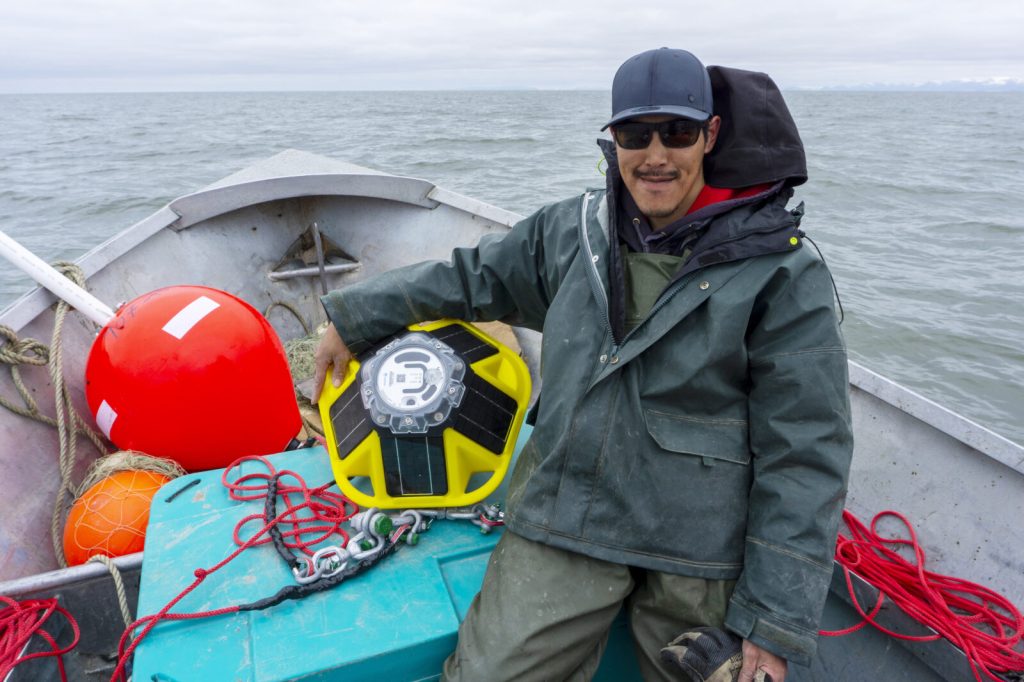
In Alaska’s Kuskokwim Bay, three buoys deployed by Nalaquq, LLCwere successfully retrieved this fall, marking the end of a highly productive firstdeployment season. The local search and rescue team selected three locations in the bay that are key subsistence fishing and hunting areas, where reliable wave data helps boaters make informed decisions. The buoys will be re-deployed next year, with educational activities planned for Quinhagak students to coincide with the start of the season.
All of the Alaska Eskimo Whaling Commission’s 2025 buoys have also been retrieved. The final tally includes one buoy in Gambell, one in Savoonga, two in Point Hope, two in Wainwright, six in Utqiaġvik, and three in Kaktovik. During the AEWC meeting on October 20 in Anchorage, Sheyna and AEWC Buoy Coordinator Martin Edwardsen hosted a session to share plans for the 2026 deployment season.
Another program highlight this year was the launch of the “Friends of Backyard Buoys” feature, which allows Sofar Spotter wave buoys not funded through the Backyard Buoys program to be added to the app. More than 20 additional buoys were visible this season, providing ocean users with even more data to support safe boating.
AOOS has also expanded the program’s educational outreach. In partnership with the Pacific Islands Observing System (PacIOOS) and the Northwest Association of Networked Ocean Observing Systems (NANOOS), AOOS developed a buoy-themed activity book for students. Available as a free download, the colorful booklet offers information and activities for all ages related to the Backyard Buoys program. The education team has also partnered with PocketLab on a wave activity using their sensors, which will be available as an iPad lesson in December 2025.
Source: AOOS